How Long Does a BIC Lighter Last? (3,000 Lights, No Expiry)
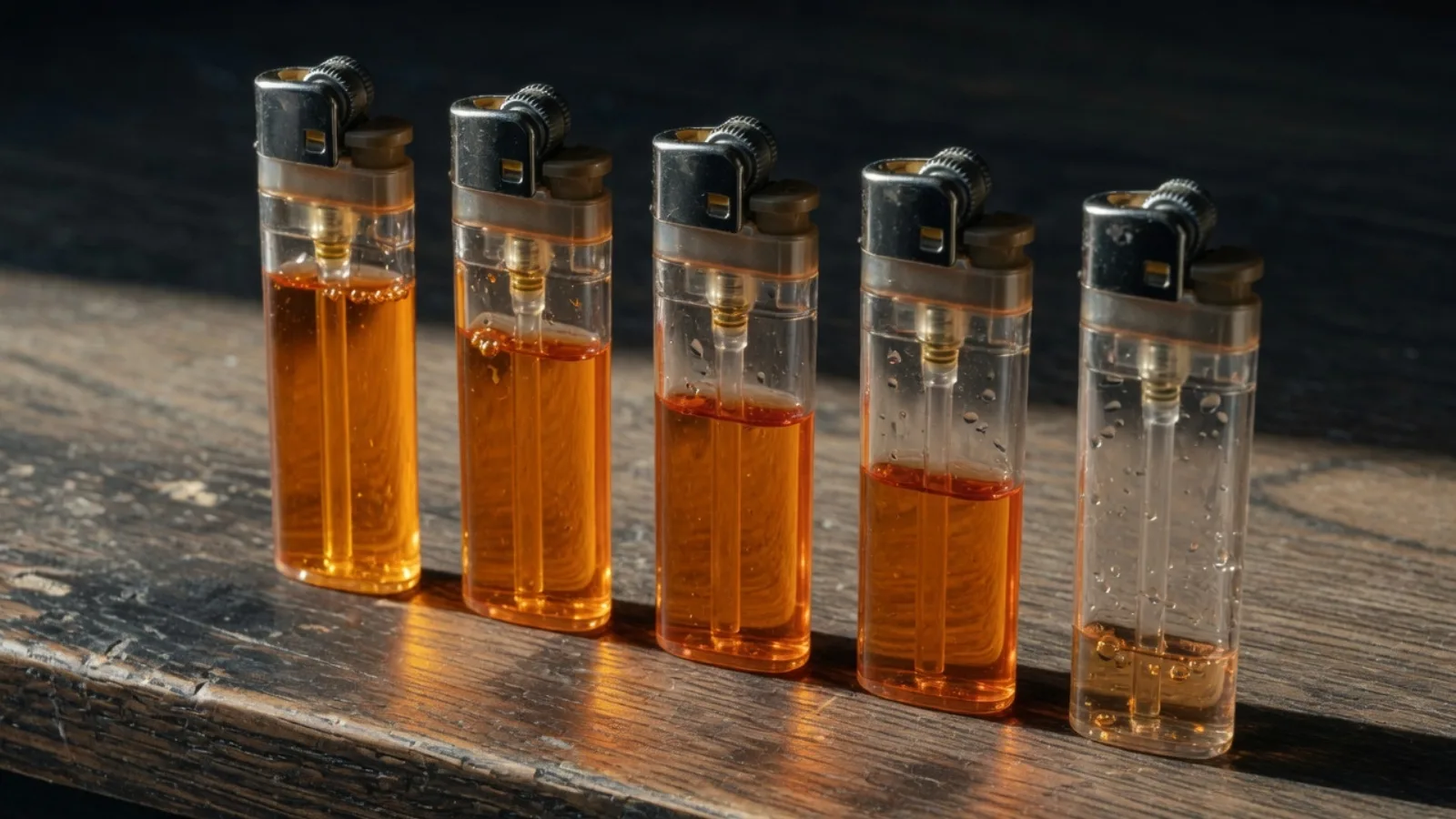
Quick answer: A full-size BIC lighter is designed for roughly 3,000 lights — around five months for a pack-a-day smoker, and several years for someone lighting candles or a grill. Lighters have no expiry date and butane doesn’t spoil, so an unused one in a drawer will still work years later. What eventually kills a stored lighter isn’t the fuel going bad; it’s fuel slowly seeping out through the seals. A Zippo is a completely different story: it loses its fuel to evaporation in one to two weeks whether you use it or not.
The Number BIC Actually Publishes
BIC rates its full-size lighter at up to 3,000 lights (the Maxi, in BIC’s own words, “lights up to 3,000 flames”). That’s the manufacturer’s own figure, and it’s the only hard number worth building on — everything else you’ll read is someone’s estimate.
Three thousand sounds enormous until you divide it by how you actually use the thing:
| How you use it | Lights per day | A full-size BIC lasts |
|---|---|---|
| Pack-a-day smoker | ~20 | ~5 months |
| Half a pack | ~10 | ~10 months |
| Cigars, pipe, occasional | ~3 | ~2.5 years |
| Candles, grill, stove | ~3 per week | Years — see below |
That bottom row is where the arithmetic stops being useful. At three lights a week you’d theoretically get nineteen years out of one lighter, and no lighter survives nineteen years. For light users, the limiting factor isn’t the fuel budget at all — it’s slow leakage, which is a different problem with a different answer.
A mini BIC holds roughly half the fuel of the full-size, so halve every figure above. Minis are the better buy only if you lose lighters faster than you empty them, which for a lot of people is honestly the case.
Do Lighters Expire?
No. BIC lighters carry no expiration date, and butane is a simple hydrocarbon that doesn’t oxidise, separate, or degrade with age. A lighter you find in a coat pocket from four years ago is not “off.” If it has fuel and a working flint, it lights.
What does happen over time is more mundane:
- Fuel permeates out. The plastic body and valve seals aren’t perfectly gas-tight. A sealed disposable slowly loses butane over years even untouched. This is why a decade-old lighter often sparks fine but produces no flame — the tank is genuinely empty, not spoiled.
- The flint corrodes. Ferrocerium oxidises in humid air. A lighter stored in a damp shed or a bathroom drawer can end up with a flint that crumbles instead of sparking, while a lighter kept somewhere dry stays fine.
- The striker wheel seizes. Rust or grit in the knurling makes the wheel stiff and the sparks weak.
None of that is expiry. It’s leakage and corrosion, and both are slowed dramatically by where you keep the thing.
How Long Does a Lighter Last in Storage?
For a disposable butane lighter kept somewhere cool, dry and out of sunlight, expect it to still work after several years — many people report five to ten. Kept in a hot car, a sunny windowsill, or a garage that swings between freezing and baking, expect a fraction of that, because heat drives both internal pressure and the rate at which fuel escapes.
Two practical rules for anything you’re stockpiling — emergency kits, camping boxes, the junk drawer:
- Store cool and dry, never hot. Room temperature in a drawer is ideal.
- Rotate them. If lighters are part of a preparedness kit, check them once a year rather than discovering a dead one when you need it.
It Depends Enormously on the Type of Lighter
“How long does a lighter last” has four different answers depending on what’s in your hand:
| Type | Fuel | Lasts (in use) | Lasts (in storage) |
|---|---|---|---|
| Disposable BIC | Butane, sealed | ~3,000 lights | Years |
| Refillable butane / torch | Butane, refillable | Days to weeks per fill | Indefinite — just refill |
| Zippo-style wick | Naphtha fluid | ~1–2 weeks per fill | Empties itself in ~2 weeks |
| Electric arc | None (USB) | ~100–300 lights per charge | Cell ages over 2–3 years |
The Zippo row is the one that surprises people. Naphtha evaporates through the wick and the case seam continuously, so a Zippo sitting untouched in a drawer runs dry in a fortnight. It’s not a flaw — it’s the cost of the open-wick design — but it makes a Zippo a poor choice for a glovebox or an emergency kit. A butane insert stops the evaporation, though it carries a two-year warranty instead of the lifetime guarantee. Our Zippo repair and care guide covers refuelling and what the lifetime guarantee does and doesn’t cover.
An arc lighter is the opposite trade: nothing to evaporate or leak, so it holds a charge for months, but the internal cell has a finite number of charge cycles and can’t usually be replaced. We compare all three head to head in Zippo vs BIC vs arc lighter.
What Actually Shortens a Lighter’s Life
- Holding the flame lit. This is the big one. Every extra second burns fuel you can’t get back, and on a disposable the metal hood gets genuinely hot, so keep each light short rather than holding it burning. Long burns are both the fastest way to drain a lighter and the most common way people burn their thumb.
- Running the flame high. If your lighter has an adjuster, a lower flame does the same job on most tasks and stretches the fuel noticeably.
- Heat. A lighter left on a dashboard loses fuel far faster than one in a drawer, and a pressurised tank in direct sun is a genuine hazard — see can a Zippo explode? for what actually goes wrong.
- Cold, temporarily. A lighter only works while its fuel is warm enough to boil. BIC fills its lighters with pure isobutane, which boils at about −12 °C (11 °F) (PubChem), so a BIC keeps lighting well below freezing and only fades as it nears that point. Lighters running on ordinary n-butane give up much sooner: it boils at −0.5 °C (31 °F) (PubChem), and below roughly 40 °F it stops making enough vapour to light. Either way nothing is broken and no fuel is lost — warm it in a fist for a minute and it works again. More on that in how to fix a lighter that won’t light.
Four Pieces of Advice You’ll See That Are Wrong
This article previously repeated some of these, so it’s worth being blunt about them:
“You can refill a BIC and replace its flint.” You can’t, in any practical sense. Disposables have no fill valve, and the flint sits under a crimped metal hood. People do pry them open, but you’re working millimetres from a pressurised butane tank to save a dollar. Refillables are for refilling — see filling up a gas lighter.
“A Zippo runs on gasoline, kerosene or diesel.” Don’t. Zippo specifies naphtha-based lighter fluid. Kerosene and diesel won’t wick properly and will foul the wick and reek; gasoline has a far lower flash point and a vapour that behaves very differently in an open-wick lighter. Use the correct fluid — it costs a few dollars.
“Store lighters in the freezer to stop the fuel evaporating.” No. Freezing a butane lighter doesn’t preserve fuel meaningfully, and it guarantees the lighter won’t work until it warms back up, plus you get condensation inside the mechanism when you take it out. Cool and dry, not frozen.
“Warm the lighter to make it last longer.” Warming a cold butane lighter restores its vapour pressure so it will light — that part is true and useful. But warmth doesn’t extend its overall life; sustained heat does the opposite by accelerating fuel loss.
Getting the Most Out of One
- Buy multipacks and keep them cool. Disposables are cheapest per light in bulk, and a drawer at room temperature is the best storage you have.
- Turn the flame down if the lighter has an adjuster.
- Light and release rather than holding the flame.
- Use the right tool for long jobs. Lighting a fireplace or a stubborn grill with a pocket disposable wastes fuel and singes fingers. A long-reach lighter or an arc lighter does it faster — see best arc lighters for camping, or our candle lighter guide for long-reach models.
- Keep one that doesn’t depend on fuel at all in your emergency kit. It’s the same logic as keeping a backup light in a blackout kit.
Curious what’s actually inside the thing? Inside a gas lighter breaks down the tank, valve, flint and piezo mechanism.
FAQ
How long does a BIC lighter last? BIC rates its full-size lighter at up to 3,000 lights. That’s roughly five months of pack-a-day smoking, about ten months at half that, and several years for occasional candle or grill use. A mini holds around half as much.
Do BIC lighters expire? No. BIC lighters carry no expiration date and butane doesn’t degrade with age. Old lighters fail because fuel has slowly permeated out through the seals or the flint has corroded — not because the fuel went bad.
How long do lighters last in storage? A disposable kept cool and dry commonly still works after five to ten years. Heat is the enemy: a lighter stored in a hot car or in direct sun loses fuel far faster.
How long does a Zippo last compared to a BIC? Very differently. A Zippo holds fuel for only one to two weeks because naphtha evaporates continuously, but the lighter itself lasts a lifetime and is repaired free by Zippo, which is why it makes such a durable gift (Zippo gift guide). A BIC holds fuel for years but is disposable.
Can you refill a BIC lighter? Not practically. There’s no fill valve and the flint is under a crimped hood. Buy a refillable butane lighter if you want to refill.
Why won’t my lighter light even though it’s full? Usually cold — the fuel stops vaporising (around 40 °F for n-butane refillables, about 11 °F for the isobutane in a BIC), so warm it in your hand. On a refillable, it’s more often air trapped in the tank, which needs bleeding before a refill.
Does the flame size affect how long a lighter lasts? Yes, substantially. A high flame burns through fuel much faster than a low one and rarely does the job any better.